
A Bad Day or a Bad Pattern? Understanding Nursing Home Concerns
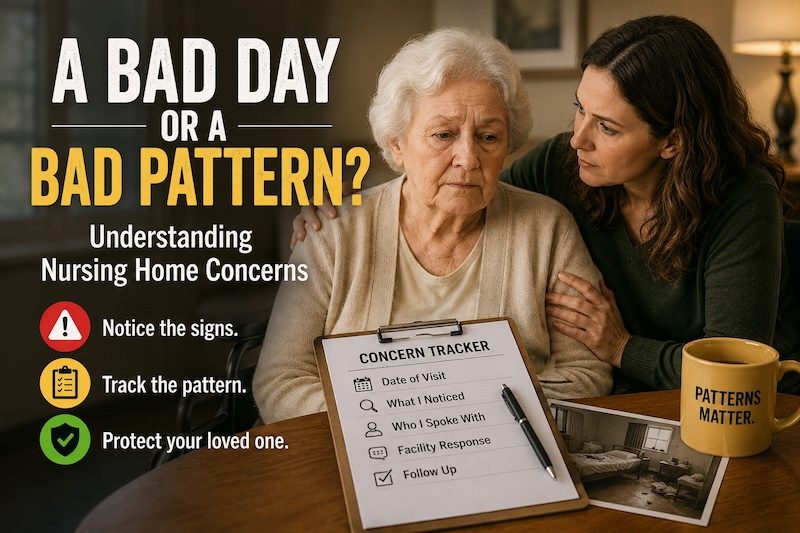
Something can feel off during a nursing home visit long before anyone can explain exactly why. A parent may seem quieter than normal. A room may look neglected. A staff member may answer a simple question in a way that feels rushed, vague, or rehearsed. One uncomfortable visit does not prove that something serious is happening, but repeated concerns should not be talked away. In long-term care, patterns matter.
What a Bad Day Can Look Like
Care facilities are busy, imperfect places. A delayed response, a missed update, a messy room, or a difficult mood can happen for ordinary reasons. Older adults may have rough days because of pain, poor sleep, medication changes, confusion, or frustration.
That is why families do not have to assume the worst every time something feels wrong. A calm question can clear up a lot. A clear answer followed by real improvement is usually a good sign. A vague answer, repeated excuse, or problem that shows up again the next visit deserves closer attention.
When Small Problems Start Forming a Pattern
A pattern starts quietly. The same shirt is dirty again. Meals seem untouched again. A loved one looks thinner, more tired, or less willing to talk. Maybe there is another bruise, another fall, another missed medication, or another complaint about being left alone for too long.
The details may seem small when they are viewed one at a time. Taken together, they can tell a different story. Families know the usual habits, moods, and fears of the people they love. If someone who used to be talkative becomes withdrawn, or a calm person suddenly seems nervous around certain staff members, that change should be taken seriously.
The Details Families Should Write Down
Stress makes memories messy. After several visits and several conversations, it becomes easy to forget who said what and when. Written notes help cut through that confusion.
Families should write down the date of each visit, what they noticed, who they spoke with, and how the facility responded. Photos of visible injuries, dirty clothing, poor room conditions, spoiled food, or hygiene concerns can also help show whether a problem happened once or kept coming back. Emails, voicemails, care-plan notes, and written complaints should be saved as well.
A record does more than organize a concern. It shows whether the facility is fixing problems or letting the same issues repeat.
Why Care Concerns Can Become Legal Concerns
Some nursing home problems stay in the realm of poor communication. Others cross into something more serious. A resident who is not fed properly, left with untreated wounds, repeatedly injured, financially exploited, or ignored after clear complaints may be facing more than bad service.
Problems in a nursing home can overlap with several legal areas when health, safety, personal injury, finances, or resident rights are involved. Families do not need to understand every legal category to recognize that a repeated failure to provide basic care is different from a one-time delay.
The practical question is simple: is the facility responding honestly and protecting the resident, or is the same harm being allowed to continue?
When the Pattern Needs a Local Lens
The warning signs can look similar across the country. A family in Georgia, North Carolina, the Midwest, or the West Coast may notice the same uneasy mix of injuries, poor hygiene, fearfulness, silence, and weak explanations. Still, once a concern becomes serious, location starts to matter because the facility, the resident, and the available local support are all tied to a specific place.
Take South Carolina as an example. A family dealing with repeated concerns at a care facility there is not looking at a vague national issue anymore. They are trying to understand what is happening to one person in one setting, with facts that need to be taken seriously. In that situation, a South Carolina elder abuse attorney can help families understand whether the pattern points to neglect, abuse, or a resident-rights concern.
When the Facility’s Answer Is Not Enough
Some problems improve after one direct conversation. A missed update gets corrected. A care plan is clarified. A staff member follows through. That kind of response can reassure a family.
The concern grows when nothing changes. If the same issue returns after complaints have already been made, the facility’s answer may no longer be enough. In South Carolina, long-term care concerns involving care quality, dignity, rights, neglect, abuse, or exploitation can be raised through the South Carolina Long Term Care Ombudsman Program.
A steady approach is usually stronger than an angry one. Specific examples, dates, names, and written follow-ups make it harder for a serious concern to be dismissed as a misunderstanding.
What Families Can Do After a Troubling Visit
After a visit that feels wrong, the first step is often simple: slow down and get specific. Speak with the resident privately if possible. Ask direct questions. Notice whether the answers sound consistent. Follow up with the facility in writing so there is a record.
It can also help to visit at different times of day. A facility may look one way during a planned afternoon visit and another way during a meal, shift change, or evening routine. Families should watch for what improves, what gets explained, and what keeps happening despite promises that it will be handled.
The point is not to turn every uncomfortable detail into an accusation. The point is to make sure a vulnerable person is not left in a worsening situation while everyone treats each warning sign as separate from the last.
Trust the Pattern, Not the Panic
A troubling visit can leave anyone shaken. Even so, the clearest picture usually comes from what happens over time. One bruise, one missed call, or one bad answer may have an explanation. A continuing pattern of injuries, fear, poor hygiene, unanswered questions, or declining care deserves action.
Families do not need to panic to be protective. They need to notice what keeps repeating, keep a clear record, and take the pattern seriously before it becomes easier for others to ignore.


