
Different Fields of Law: 24 Legal Practice Areas Explained
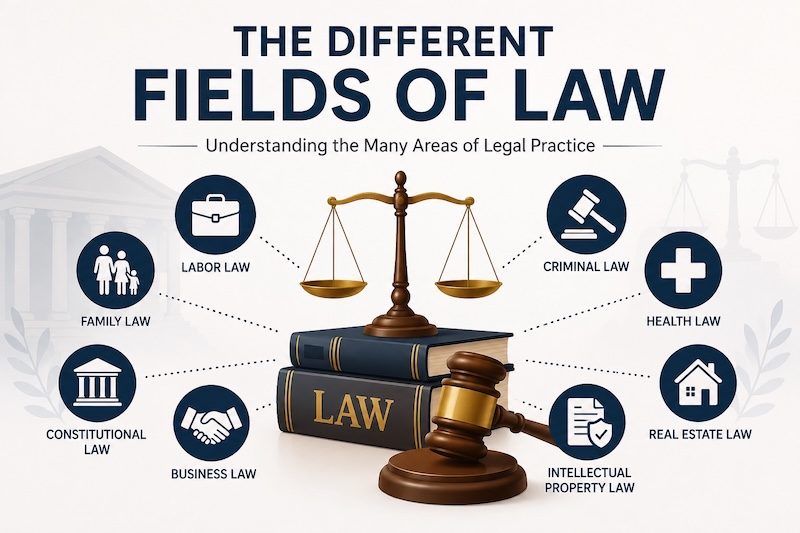
Law covers much more than crimes and court cases. It affects families, businesses, property, jobs, technology, healthcare, government decisions, and international trade. Each type of legal issue needs a different set of rules and skills. That is why lawyers often focus on one or more legal practice areas.
The names of these fields can change from one country to another. The basic subjects still share many features. A family lawyer may work on divorce and child arrangements. A corporate lawyer may help a company raise money or buy another business. A criminal lawyer may defend a person accused of an offence.
Important: This article gives general educational information. It does not give legal advice. Laws and legal procedures depend on the country, state, province, or territory involved.
What Does a Field of Law Mean?
A field of law is a group of rules that deals with a certain subject. Criminal law deals with offences and punishment. Contract law deals with agreements. Property law deals with ownership and the use of land or other assets.
A legal field can also describe the type of work a lawyer performs. Some lawyers spend much of their time in court. Others review documents, negotiate deals, advise clients, or work with government agencies.
Legal practice areas do not sit in separate boxes. One case can involve several branches of law. A dispute between a company and a former employee may involve employment rules, contract terms, confidential information, and data privacy.
The Main Ways Law Gets Divided
People often group legal fields in three broad ways. These groups help explain what the law controls and how lawyers handle a matter.
Public law and private law
Public law controls the relationship between individuals and the state. Criminal law, constitutional law, tax law, and administrative law often fall within this group.
Private law deals with legal relationships between people, companies, and other private organisations. Contract disputes, property claims, family cases, and personal injury matters often sit within private law.
Criminal matters and civil matters
Criminal cases focus on conduct that the state treats as an offence. The court may impose a fine, restriction, community penalty, or prison sentence after a conviction.
Civil cases usually involve rights, duties, money, property, or compensation. A civil court may order payment, stop certain conduct, enforce an agreement, or declare the rights of the parties.
The phrase “civil law” can also describe a legal system built mainly around written codes. In this article, civil matters means non-criminal legal disputes.
Dispute work and advisory work
Dispute lawyers handle claims, hearings, trials, arbitration, and settlement talks. This work often gets called litigation.
Advisory lawyers help clients avoid problems or complete legal tasks. They draft contracts, plan transactions, review risks, apply for permits, and explain legal duties.
24 Major Fields of Law
No single list covers every branch of law. New practice areas also appear as technology, business, and society change. The fields below cover many of the legal issues that individuals and organisations face.
1. Criminal Law
Criminal law deals with acts that the state treats as offences. Prosecutors bring cases on behalf of the public. Defence lawyers advise and represent people accused of crimes.
The work may begin during a police investigation. It can continue through bail hearings, plea discussions, trial, sentencing, and appeal. Criminal lawyers study evidence, interview witnesses, question how authorities collected evidence, and protect the accused person’s legal rights.
Often includes: theft, assault, fraud, cybercrime, drug offences, driving offences, and financial crime.
2. Civil Litigation
Civil litigation covers disputes that do not involve a criminal prosecution. One person or organisation brings a claim against another party. The claimant may seek money, the return of property, or a court order.
Civil litigators review evidence, prepare court papers, question witnesses, negotiate settlements, and present cases at hearings. Many civil disputes end through negotiation or mediation before a full trial takes place.
Often includes: unpaid debts, broken agreements, property disputes, professional negligence, and business claims.
3. Family Law
Family law deals with legal issues between partners, parents, children, and other family members. A family lawyer may help a couple end a marriage or decide how to divide money and property.
This field also covers child arrangements, financial support, adoption, guardianship, and protection from domestic abuse. Courts usually place strong weight on the safety and welfare of children. The names used for custody and parental rights differ across legal systems.
Often includes: divorce, child residence, visitation, support payments, adoption, and protective orders.
4. Corporate and Business Law
Corporate law focuses on how companies form, operate, raise money, and make major decisions. Lawyers help founders choose a business structure and prepare documents that set out the rights of owners and directors.
Large transactions may involve the purchase, sale, or merger of companies. Corporate lawyers check records, identify risks, negotiate terms, and prepare closing documents. They also advise boards on their duties and company rules.
Often includes: company formation, shareholder rights, investments, mergers, acquisitions, and corporate governance.
5. Contract Law
Contract law controls agreements that create legal duties. A valid contract usually identifies what each party must do. It may also explain payment, deadlines, quality standards, cancellation rights, and ways to resolve disputes.
Contract lawyers draft and review agreements before anyone signs them. They also handle claims after one party fails to perform its duties. A court may award compensation or order another suitable remedy.
Often includes: service agreements, sales contracts, leases, licences, loan documents, and supplier terms.
6. Employment and Labor Law
Employment law sets rules for the relationship between workers and employers. It covers pay, working hours, leave, workplace safety, discrimination, harassment, and dismissal.
Employment lawyers may represent a worker, a company, or a public body. They draft workplace policies, review employment contracts, investigate complaints, and handle tribunal or court claims. Labor law also covers trade unions, collective bargaining, and organised worker action.
Often includes: unpaid wages, unfair dismissal, workplace discrimination, employee benefits, and union disputes.
7. Real Estate and Property Law
Real estate law deals with land, buildings, ownership, leases, and the right to use property. Lawyers help buyers and sellers check ownership records, review contracts, arrange transfers, and deal with lenders.
Property lawyers also handle disputes between landlords and tenants. Other matters involve boundaries, shared access, planning permission, construction, land use, and zoning. Commercial property work may include offices, shops, warehouses, hotels, and development sites.
Often includes: home purchases, commercial leases, title issues, boundary claims, and development projects.
8. Intellectual Property Law
Intellectual property law protects certain creations, inventions, brands, designs, and confidential business knowledge. Different rights protect different types of work.
Patents may protect qualifying inventions. Trademarks identify the source of goods or services. Copyright protects original creative works under the rules of the relevant country. Trade secret law protects valuable information that a business keeps confidential.
Lawyers help clients register rights where registration applies. They also draft licences and act in infringement disputes.
Often includes: inventions, brand names, logos, books, music, software, product designs, and trade secrets.
9. Tax Law
Tax law controls how governments collect money from individuals, companies, property, sales, income, and other activities. Tax lawyers explain what a client owes and how a transaction may affect that amount.
They also help with audits, tax authority investigations, appeals, and disputes. Business transactions often need tax advice before the parties sign an agreement. Tax planning must follow the law and differs from hiding income or giving false information.
Often includes: income tax, corporate tax, inheritance tax, sales tax, customs duties, and tax disputes.
10. Immigration Law
Immigration law controls who may enter, live, study, or work in a country. It also covers permanent residence, citizenship, asylum, and removal proceedings.
Immigration lawyers prepare applications, collect evidence, respond to government requests, and represent clients at hearings. They may help individuals, families, students, employers, or people seeking protection. Immigration rules can change through new laws, government policies, and court decisions.
Often includes: work visas, family visas, residency, citizenship, asylum, appeals, and deportation defence.
11. Constitutional Law
Constitutional law deals with the basic powers of government and the rights protected by a country’s constitution. It can control what lawmakers, courts, presidents, ministers, police forces, and public agencies may do.
Constitutional cases may examine free speech, equality, voting, privacy, religious freedom, fair procedure, or the separation of government powers. Lawyers may ask a court to review a law or government action that conflicts with the constitution.
Often includes: protected rights, government powers, elections, judicial review, and limits on state action.
12. Administrative and Regulatory Law
Administrative law controls how government departments, regulators, licensing bodies, and public agencies make decisions. These organisations may issue permits, set standards, investigate conduct, or impose penalties.
Administrative lawyers help clients understand agency rules and respond to enforcement action. They may challenge a decision through an internal appeal, tribunal, or court review. This field often overlaps with healthcare, finance, immigration, environmental, and employment law.
Often includes: licences, permits, professional discipline, agency investigations, and government appeals.
13. Environmental Law
Environmental law sets rules for pollution, waste, water, air quality, land use, wildlife, and natural resources. It affects factories, farms, energy companies, property developers, public bodies, and local communities.
Lawyers may help a project obtain environmental approval. They also handle clean-up duties, regulatory investigations, public challenges, and claims for environmental damage. Scientific reports often play an important role in this work.
Often includes: pollution permits, waste disposal, contaminated land, conservation, and environmental impact reviews.
14. Health and Medical Law
Health law covers healthcare providers, patients, insurers, medicines, medical devices, and public health systems. Lawyers advise hospitals, clinics, doctors, care homes, regulators, and patients.
This field deals with patient consent, confidentiality, professional licensing, treatment decisions, healthcare payments, and safety rules. Medical negligence claims may fall under both health law and personal injury law. Public health emergencies can also involve constitutional and administrative rules.
Often includes: patient rights, medical privacy, licensing, insurance disputes, consent, and clinical negligence.
15. Personal Injury and Tort Law
Tort law deals with civil wrongs that cause harm outside a contract. A personal injury claim often argues that another person or company failed to use proper care.
The injured person may seek payment for medical costs, lost income, pain, long-term care, or property damage. Lawyers study accident reports, medical records, expert opinions, and insurance documents. Tort law also covers some intentional acts and harm to reputation.
Often includes: road accidents, unsafe property, defective products, medical negligence, and defamation.
16. Bankruptcy and Insolvency Law
Bankruptcy and insolvency law deals with people or organisations that cannot meet their financial duties. The process may allow debt repayment, business restructuring, asset sales, or relief from certain debts.
Lawyers represent debtors, lenders, suppliers, investors, trustees, and other creditors. They review assets, claims, security rights, and payment priorities. The procedures and available forms of debt relief differ by country.
Often includes: personal debt relief, company restructuring, creditor claims, asset recovery, and liquidation.
17. Estate Planning and Probate Law
Estate planning helps people decide what should happen to their money, property, and responsibilities after death or loss of capacity. Lawyers may prepare wills, trusts, powers of attorney, and healthcare instructions.
Probate deals with the legal process after a person dies. The work may include proving a will, identifying assets, paying debts, handling taxes, and transferring property to beneficiaries. Disputes can arise over the validity or meaning of a will.
Often includes: wills, trusts, inheritance, estate administration, and disputes between beneficiaries.
18. Privacy, Data Protection, and Cybersecurity Law
Privacy law controls how organisations collect, store, share, secure, and delete personal information. It applies to websites, apps, employers, schools, banks, healthcare providers, and online services.
Lawyers prepare privacy notices, review data practices, negotiate technology contracts, and respond to data breaches. Cybersecurity work also covers security standards, incident reporting, computer misuse, and investigations after an attack.
Often includes: personal data, cookies, tracking, breach notices, online accounts, and cross-border data transfers.
19. International Law
International law deals with legal issues that cross national borders. Public international law controls relationships between countries and international organisations. It covers treaties, armed conflict, diplomacy, and state responsibility.
Private international law helps decide which country’s laws and courts apply to a cross-border dispute. International business lawyers also work on trade, foreign investment, sanctions, shipping, and arbitration.
Often includes: treaties, cross-border contracts, international arbitration, trade rules, sanctions, and jurisdiction disputes.
20. Human Rights and Civil Rights Law
Human rights law protects basic rights linked to dignity, equality, liberty, and fair treatment. Civil rights law often focuses on rights protected within one country.
Cases may involve discrimination, unlawful detention, voting, speech, disability access, religious freedom, or unfair treatment by public bodies. Lawyers may bring claims in national courts, constitutional courts, commissions, or international bodies. The available rights and procedures depend on the legal system.
Often includes: equality, discrimination, free expression, fair trials, disability access, and unlawful state action.
21. Consumer Protection Law
Consumer protection law sets standards for businesses that sell goods or services to the public. It aims to prevent misleading claims, unsafe products, hidden charges, unfair terms, and dishonest sales practices.
Lawyers may represent customers, companies, regulators, or consumer groups. They handle refunds, product safety issues, advertising complaints, subscription disputes, and group claims. Online shops and digital services must also follow consumer rules.
Often includes: faulty products, false advertising, unfair contract terms, scams, refunds, and online purchases.
22. Competition and Antitrust Law
Competition law aims to protect fair competition in the market. It limits agreements and business conduct that may harm customers or block competitors.
Lawyers review mergers, pricing arrangements, distribution agreements, and the conduct of companies with strong market power. Government regulators may investigate suspected price fixing, market sharing, or unlawful efforts to remove competition. The term antitrust law appears most often in the United States.
Often includes: mergers, price fixing, cartels, market power, exclusive deals, and regulatory investigations.
23. Education Law
Education law covers schools, universities, students, teachers, parents, and education authorities. It deals with access to education, school discipline, student records, safeguarding, admissions, and staff employment.
Some lawyers focus on support for students with disabilities or additional learning needs. Others advise schools on policies, funding, discrimination, governance, and regulatory inspections. Constitutional rights may also affect education cases.
Often includes: special education, school discipline, admissions, student privacy, discrimination, and safeguarding.
24. Maritime and Admiralty Law
Maritime law deals with ships, shipping companies, ports, cargo, offshore work, and incidents on navigable waters. The word admiralty often refers to court cases involving maritime matters.
Lawyers handle cargo damage, vessel collisions, marine insurance, ship finance, pollution, crew injuries, and salvage claims. International treaties and the laws of several countries may affect the same case.
Often includes: shipping contracts, damaged cargo, marine insurance, crew claims, collisions, and port rules.
One Problem Can Involve Several Fields of Law
Real legal problems often cross the borders between practice areas. A cyberattack on an online shop offers a clear example.
The company may need to notify a privacy regulator. Customers may bring consumer or contract claims. Police may investigate the attacker. Employees may face questions about workplace duties. An insurer may decide whether a cyber policy covers the loss.
Which Field of Law Covers a Common Legal Problem?
| Legal problem | Main field | Other fields that may apply |
|---|---|---|
| A person faces arrest or a criminal charge | Criminal law | Constitutional law, human rights law |
| A couple plans a divorce | Family law | Property law, tax law, estate law |
| A customer refuses to pay an invoice | Contract law | Civil litigation, bankruptcy law |
| A person buys or leases a building | Real estate law | Contract law, tax law, environmental law |
| Founders create a new company | Corporate law | Contract, tax, employment, and intellectual property law |
| A worker challenges a dismissal | Employment law | Contract law, discrimination law, civil litigation |
| A person applies for residence or citizenship | Immigration law | Administrative law, human rights law |
| A family deals with a deceased person’s assets | Probate law | Property law, tax law, civil litigation |
| A competitor copies a brand or invention | Intellectual property law | Contract law, competition law, civil litigation |
| An organisation suffers a data breach | Privacy and cybersecurity law | Consumer, contract, employment, insurance, and criminal law |
Other Specialised Fields of Law
The legal profession includes many smaller or highly focused practice areas. Some grow from older branches of law. Others develop after changes in technology, science, or business.
- Insurance law covers insurance policies, claim decisions, coverage disputes, and the duties of insurers.
- Construction law covers building contracts, project delays, defects, payment claims, safety, and contractor disputes.
- Energy law covers oil, gas, electricity, renewable power, utilities, permits, and energy markets.
- Entertainment and media law covers publishing, film, television, music, talent agreements, advertising, and media rights.
- Sports law covers athlete contracts, disciplinary rules, broadcasting rights, sponsorship, and sports governance.
- Aviation law covers aircraft, airlines, passenger claims, airports, safety rules, and international air travel.
- Technology law covers software agreements, online platforms, artificial intelligence, digital services, and technology regulation.
- Elder law covers later-life planning, care arrangements, financial protection, capacity, and inheritance.
- Military law covers rules for armed forces, military discipline, service rights, and military court proceedings.
- Election law covers voting rules, campaign finance, candidates, political advertising, and election disputes.
- Space law covers satellites, launches, orbital activity, licensing, international treaties, and commercial space services.
How to Identify the Right Legal Field
A client does not need to know the exact name of the practice area before contacting a lawyer. A clear summary of the problem often gives a law firm enough information to direct the matter.
- Parties involved: Identify whether the matter involves a family member, employer, customer, company, landlord, police force, regulator, or government department.
- Main event: Describe the arrest, accident, dismissal, agreement, purchase, injury, application, or government decision.
- Documents: Collect contracts, letters, court papers, receipts, messages, policies, medical records, and official notices.
- Result needed: State whether the matter involves compensation, defence, permission, a court order, a refund, an appeal, or legal planning.
- Location: Identify the country and local area connected to the issue. Different laws may apply in different places.
- Deadline: Check every court notice, government letter, and contract for response dates. Legal claims may also have strict time limits.
Choosing a Field of Law as a Career
Law students and new lawyers often choose a practice area after studying several subjects or gaining work experience. The type of daily work matters as much as the legal topic.
| Preferred type of work | Fields worth exploring |
|---|---|
| Speaking in court and testing evidence | Criminal law, civil litigation, family law, and personal injury law |
| Drafting agreements and negotiating deals | Corporate law, contract law, real estate law, and intellectual property law |
| Working with numbers and financial records | Tax law, bankruptcy law, corporate law, and competition law |
| Working with science or technology | Patent law, health law, environmental law, privacy law, and cybersecurity law |
| Reviewing government decisions | Constitutional law, administrative law, immigration law, and human rights law |
| Helping individuals with major life events | Family law, estate planning, immigration law, employment law, and elder law |
A lawyer does not always stay in one field for an entire career. Skills from one area may transfer to another. A civil litigator can move into employment disputes. A corporate lawyer can develop a focus on technology deals or healthcare companies.
Questions to Consider When Choosing a Lawyer
The lawyer should understand the main legal subject and the procedure involved. Experience with the correct court, tribunal, agency, or transaction can matter as much as the broad practice label.
- Check whether the lawyer handles the exact type of matter involved.
- Ask about experience with the relevant court, regulator, or government department.
- Confirm that the lawyer may practise in the required location.
- Discuss legal fees and other likely costs before substantial work begins.
- Ask who will manage the matter and how the firm will provide updates.
- Share important deadlines at the start of the conversation.
A general business lawyer may handle routine contracts but refer a patent dispute to an intellectual property specialist. A family lawyer may also bring in a tax adviser during a complex divorce. Referral between specialists forms a normal part of legal work.
Frequently Asked Questions About the Fields of Law
How many fields of law are there?
No universal number exists. Legal systems divide subjects in different ways. Broad fields also contain smaller specialities. Technology, space, artificial intelligence, and digital privacy continue to create new areas of legal work.
What are the most common fields of law?
Common fields include criminal law, family law, contract law, corporate law, employment law, property law, personal injury law, tax law, immigration law, and estate planning.
What is the difference between criminal law and civil law?
Criminal law deals with offences prosecuted by the state. Civil law deals with non-criminal rights and disputes. A civil court may award compensation or issue an order. A criminal court may impose a sentence after conviction.
Can one lawyer practise in several fields?
Yes. Many lawyers work in connected practice areas. A business lawyer may cover corporate law, contracts, employment issues, and commercial disputes. Complex matters may still require help from a specialist.
Which field of law deals with companies?
Corporate and business law deals most directly with companies. A business may also need advice on contracts, tax, employment, competition, intellectual property, privacy, property, and environmental rules.
Which field covers websites and online businesses?
Online businesses may need privacy law, cybersecurity law, consumer law, contract law, intellectual property law, advertising law, tax law, and competition law. The correct field depends on the specific issue.
Which type of law deals with wills?
Estate planning lawyers prepare wills and related documents. Probate lawyers handle the estate after a person dies. Some lawyers work in both areas.
What type of lawyer handles government decisions?
An administrative lawyer often handles decisions made by regulators and public agencies. Constitutional, immigration, tax, environmental, or human rights law may also apply.
The Right Field Depends on the Exact Problem
The different fields of law help lawyers organise a large and connected legal system. Criminal law deals with offences. Family law deals with relationships and children. Corporate law supports businesses. Constitutional and administrative law control government power. Newer practice areas deal with data, cybersecurity, digital platforms, and artificial intelligence.
The facts decide which legal field applies. The people involved, the location, the documents, and the result needed can move a matter from one area to another. A clear description of the problem helps identify the right legal practice area and the right lawyer.


