
Craigiehall Architect: Who Designed the Main Building?
Craigiehall House Architecture
The architect who designed the main building at Craigiehall was Sir William Bruce, one of the defining figures in the rise of classical country-house architecture in Scotland. Craigiehall House was designed in the 1690s and completed in 1699 for the Annandale family, replacing an older tower house with a compact, symmetrical, and formally composed country residence near Edinburgh.
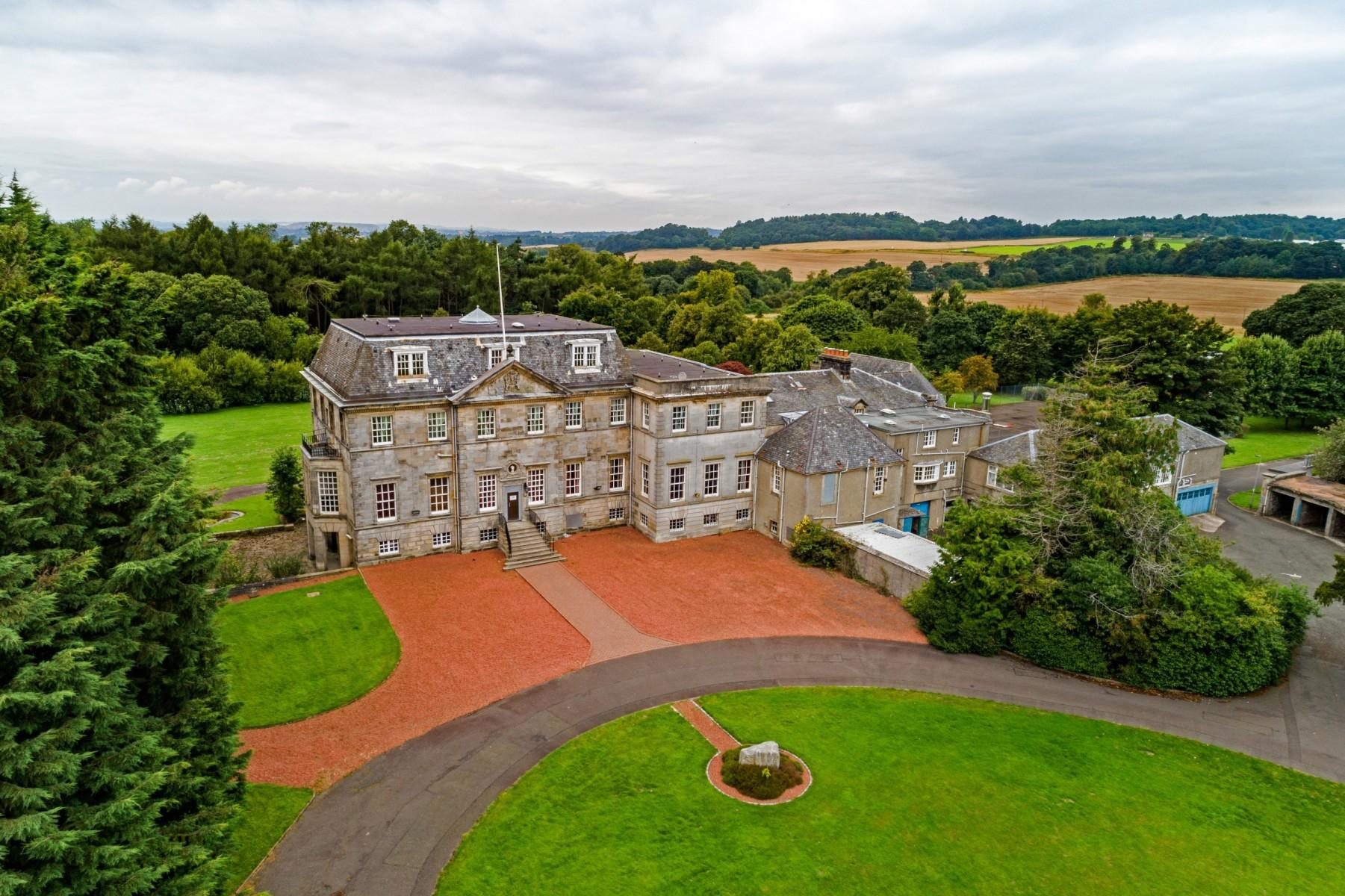
Who Designed Craigiehall’s Main Building?
The main building at Craigiehall, usually referred to as Craigiehall House, was designed by Sir William Bruce. The house stands near Cramond, west of Edinburgh, within the historic Craigiehall estate and designed landscape. It is one of Scotland’s important late-17th-century country houses because it shows the movement away from older defensive tower-house traditions and toward a more ordered, classical domestic architecture.
The design is generally dated to 1695-1699, and the main house was completed in 1699. Its patron was William Johnstone, Earl of Annandale, whose marriage to Sophia Fairholm brought the Craigiehall estate into the Annandale family. Rather than adapting the existing tower house, the owners commissioned a new residence that could express status, comfort, symmetry, and modern taste.
- Main architect: Sir William Bruce
- Main building: Craigiehall House
- Location: Near Cramond, west of Edinburgh, Scotland
- Designed and built: 1695-1699
- Completion date: 1699
- Architectural character: Late-17th-century classical country house
- Listing status: Category A listed building
Sir William Bruce: The Architect Behind Craigiehall

Sir William Bruce was not a builder in the narrow sense. He belonged to the 17th-century tradition of the gentleman-architect: a figure who combined social standing, political connections, taste, patronage, and architectural judgment. His career helped shift Scottish elite architecture toward classical proportion, balanced facades, axial planning, and more refined domestic interiors.
Craigiehall is a useful example of Bruce’s skill because it is not an enormous palace. It is a measured country house, designed on a controlled scale, where the authority of the architecture comes from proportion rather than size. That makes it especially important for people searching for the architect of Craigiehall’s main building: the answer is not simply a name, but a link to a wider moment in Scottish architectural history.
Bruce is also associated with major Scottish houses such as Kinross House and early work connected with Hopetoun House. Craigiehall belongs to the same cultural world of late-17th-century classical design.
Why Craigiehall Was a Modern House for Its Time
Before Craigiehall House was built, the estate had an older tower house. That earlier form belonged to a very different architectural tradition, one shaped by security, height, and inherited medieval patterns. Bruce’s new Craigiehall replaced that with a compact classical house whose principal elevations were arranged with symmetry and ceremony.
The main house is described by Historic Environment Scotland as a rectangular-plan classical country house. Its most recognizable features include polished ashlar sandstone, rusticated quoins, a raised basement, carefully detailed window surrounds, and a central pedimented section. The east elevation forms the principal entrance front, while the west elevation also carries a pedimented central block with family arms, initials, and the date 1699.
This architectural language matters. It tells us that Craigiehall was not designed as a fortified house or a picturesque ruin. It was conceived as a fashionable, comfortable, and ordered country residence for an aristocratic family with close ties to Edinburgh’s political and social world.
Did Anyone Else Help Design Craigiehall?
Several names appear in Craigiehall’s architectural history, which is why the question can become confusing. The main building, however, is credited to Sir William Bruce. Historic Environment Scotland notes that other leading figures were consulted and that the final house may have incorporated ideas associated with earlier design proposals.
James Smith, the King’s Master of Works in Scotland, prepared a scheme for a new house. His proposal was not the final accepted design, but some elements, including ideas around the pedimented front, are understood to have influenced the finished building. This does not change the central attribution: Bruce remains the architect of the main house.
Thomas Bachop, also written as Bauchop in some historical references, was the mason connected with the building work. For a 17th-century country house, that role was significant. The finished structure depended not only on the architect’s design but also on the skill of masons, plasterers, smiths, joiners, and other craftsmen who translated drawings and models into stone, timber, metal, and interior finish.
Later Architects at Craigiehall
Craigiehall did not remain unchanged after 1699. Later owners altered the house and its estate, and those changes brought in other architects. These later additions are part of Craigiehall’s story, but they should not be confused with the design of the original main building.
- William Burn added a dining room extension around 1830.
- David Bryce added a service wing in 1853.
- Robert Lorimer carried out mainly internal alterations in the 1920s.
The distinction is important for searchers: William Burn, David Bryce, and Robert Lorimer are connected with Craigiehall, but the architect who designed the main late-17th-century house was Sir William Bruce.
The Main Building in Its Landscape

Craigiehall’s architecture was not meant to be understood in isolation from its landscape. The house sat within a formal estate arrangement, with drives, lawns, garden features, and later ornamental structures shaping the approach to the main building. Parks & Gardens records Craigiehall as a designed landscape of historical and architectural interest, with the house standing on the north bank of the River Almond.
This relationship between house and landscape was central to country-house design. The main building presented a controlled classical face, while the surrounding grounds provided views, movement, status, and pleasure. Later estate features, including the walled garden, grotto, bridge, doocot, and temple, added further layers to the Craigiehall landscape.
Why the Attribution Matters
The phrase craigiehall architect who designed main building is a narrow search, but it points to a larger question: who gave Craigiehall House its architectural identity? The answer is Bruce because the main building reflects the ideals associated with his work: regularity, proportion, restrained classical detail, and a decisive break from the older Scottish tower-house tradition.
Craigiehall also helps explain Bruce’s wider influence. Scotland’s late-17th-century country houses were not simply decorative projects. They expressed changing ideas about domestic life, social order, comfort, privacy, and landownership. A house like Craigiehall could be compact and still carry architectural weight because it was carefully planned, formally composed, and tied to a designed estate setting.
Common Confusion: Craigiehall, Craighall, and Craigie Hall
It is easy to confuse Craigiehall with similarly named buildings and places. Craigiehall House near Edinburgh is the building associated with Sir William Bruce. It should not be confused with Craigie Hall in Glasgow or with other places using the names Craighall, Craigie, or Craig Hall. If the question is about the main historic building at Craigiehall near Cramond and South Queensferry, the architect is Sir William Bruce.
Frequently Asked Questions
Who was the architect of Craigiehall’s main building?
The architect of Craigiehall’s main building was Sir William Bruce.
When was Craigiehall House built?
Craigiehall House was designed and built in the period 1695-1699. The main house is dated 1699.
Where is Craigiehall House?
Craigiehall House is near Cramond, west of Edinburgh, Scotland, close to the River Almond and the South Queensferry area.
What architectural style is Craigiehall House?
Craigiehall House is a late-17th-century classical country house. It is associated with the early development of classical domestic architecture in Scotland.
Did James Smith design Craigiehall?
James Smith prepared a design scheme and may have influenced aspects of the final building, but the main building is credited to Sir William Bruce.
Which later architects worked on Craigiehall?
Later architects connected with Craigiehall include William Burn, David Bryce, and Robert Lorimer. Their work relates to later additions or alterations, not the original main-house design.
Conclusion
The architect who designed Craigiehall’s main building was Sir William Bruce. Completed in 1699, Craigiehall House is an important Scottish classical country house whose design reflects Bruce’s role in moving elite domestic architecture away from medieval tower-house traditions and toward symmetry, proportion, and formal classical planning. Later architects altered parts of the house and estate, but Bruce remains the key architect behind the main building.