Low Vitamin D in Pregnancy and a Child’s Future Multiple Sclerosis Risk
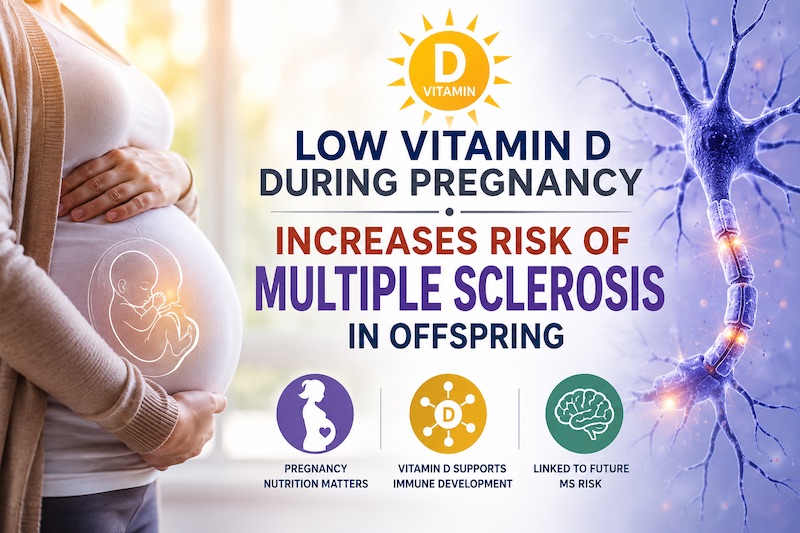
Vitamin D supports bone growth and helps the immune system work as it should. A growing area of research also links a mother’s vitamin D level during pregnancy with her child’s risk of developing multiple sclerosis later in life.
One major study found a higher rate of multiple sclerosis among people whose mothers had severe vitamin D deficiency in early pregnancy. The finding deserves attention. It does not mean that a low blood result will cause the disease.
Multiple sclerosis develops through a mix of genetic and environmental factors. Maternal nutrition may form one small part of that picture. Researchers still need stronger evidence before they can say that taking extra vitamin D during pregnancy prevents the condition.
What Did the Finnish Pregnancy Study Find?
Researchers published one of the best-known studies on this subject in 2016. They used stored blood samples from the Finnish Maternity Cohort. Finland has collected serum samples from pregnant women for many years. This gave the research team a rare chance to study prenatal vitamin levels decades later.
The team identified 176 people who later received a multiple sclerosis diagnosis. Researchers compared them with 326 people who did not have the disease. The groups matched for factors such as birth region and birth date.
More than 70% of the maternal blood samples came from the first trimester. Researchers measured 25-hydroxyvitamin D. This is the main form doctors use to assess vitamin D status through a blood test.
The study defined deficiency as a level below 30 nanomoles per liter. This equals about 12 nanograms per milliliter. Children of mothers below that level had a relative risk of 1.90 compared with children of mothers who were not deficient.
In simple terms, the study found almost twice the relative risk. The result did not show that every increase in the mother’s vitamin level produced a clear drop in risk. The overall trend failed to reach statistical significance. This detail makes the result less straightforward than many headlines suggest.
What Is Multiple Sclerosis?
Multiple sclerosis is a long-term disease of the central nervous system. The central nervous system includes the brain and spinal cord.
In multiple sclerosis, immune cells attack myelin. Myelin forms a protective covering around nerve fibers. Damage to this covering can slow or block messages between the brain and the rest of the body.
Symptoms differ from one person to another. They may include blurred vision, numbness, weakness, poor balance, muscle stiffness and severe tiredness. Symptoms may appear in attacks or worsen over time.
No single event causes multiple sclerosis. A person may carry a genetic tendency and never develop it. Environmental exposures can also affect risk. Vitamin D forms only one part of a much larger process.
Why Might Vitamin D During Pregnancy Matter?
A developing baby relies on the mother for its vitamin D supply. The mother’s blood level affects how much of the nutrient reaches the placenta and fetus.
Vitamin D helps the body absorb calcium. This role supports the development of bones and teeth. The nutrient also affects immune signals, inflammation, cell growth and nerve function.
Researchers think that low levels during a sensitive stage of fetal development may alter how the immune system matures. Such changes could affect the child’s response to infections or immune triggers later in life.
This explanation remains a theory. Scientists have not mapped a direct path from maternal deficiency to multiple sclerosis.
What Does the Wider Research Show?
A 2020 systematic review combined four case-control studies. The review included measurements taken during pregnancy or shortly after birth.
Researchers found that higher gestational vitamin D levels were linked with 37% lower odds of multiple sclerosis in the children. The combined odds ratio was 0.63.
The result supports a possible protective link. It does not settle the issue. The studies used different definitions of deficiency. They also included people from different countries and measured the nutrient at different stages.
Some earlier studies found no clear connection between pregnancy levels and later multiple sclerosis. Other research linked a higher maternal intake of milk and vitamin D with lower risk. These mixed results show why scientists avoid making a firm claim.
Why the Evidence Cannot Prove That Deficiency Causes MS
The main studies followed real pregnancies rather than assigning women to low or high vitamin D groups. This type of research can find patterns. It cannot remove every other explanation.
- A single blood sample may not represent the mother’s level throughout pregnancy.
- Season and sunlight can affect the test result.
- Diet, body weight and physical activity may influence both vitamin status and health.
- Genetic traits may affect how the body processes the nutrient.
- The studies included a limited number of people who developed multiple sclerosis.
- Researchers used different blood-level cutoffs and study methods.
A trial designed to test prevention would need to follow thousands of children for decades. Such a study would take a long time and face practical limits.
What Does “Nearly Twice the Risk” Mean?
Relative risk can sound more alarming than it is. It compares one group with another. It does not show the chance that an individual child will develop the disease.
Multiple sclerosis remains uncommon. A low pregnancy blood result should lead to a calm discussion with a doctor. It should not cause fear about the child’s future.
How Much Vitamin D Is Recommended During Pregnancy?
In the United States, the recommended dietary allowance during pregnancy is 15 micrograms per day. This equals 600 international units.
The general upper intake limit for pregnant adults is 100 micrograms or 4,000 international units per day. This total includes food, prenatal vitamins and any separate supplements.
A doctor may prescribe a different amount to treat a confirmed deficiency. The general upper limit does not replace medical treatment or a personal dosing plan.
| Measurement | Amount | What It Means |
|---|---|---|
| Recommended dietary allowance during pregnancy | 15 micrograms or 600 international units daily | The standard United States intake target for most pregnant adults. |
| General daily upper limit | 100 micrograms or 4,000 international units | The limit includes all foods and supplements. Medical treatment may follow a different plan. |
| Deficiency level used in the Finnish study | Below 30 nanomoles per liter or about 12 nanograms per milliliter | This was the research cutoff. Laboratories and medical groups may use different ranges. |
Should Every Pregnant Woman Get a Vitamin D Test?
The American College of Obstetricians and Gynecologists does not recommend routine screening for every pregnant woman. It states that current evidence does not support testing all pregnancies.
Testing may make sense when a woman has a higher chance of deficiency. A doctor or midwife may consider a blood test in the following situations:
- Previous tests showed low vitamin D.
- The woman gets little direct sunlight.
- Clothing covers most of the skin outdoors.
- The woman has darker skin, which produces less vitamin D from the same sunlight exposure.
- A digestive condition limits nutrient absorption.
- The woman has had bariatric surgery.
- Obesity or certain medicines may affect vitamin D status.
- The woman has bone pain, muscle weakness or another sign that needs medical review.
A blood test gives more useful information than choosing a high supplement dose without testing.
Are Vitamin D Supplements Safe During Pregnancy?
Most prenatal vitamins contain some vitamin D. The amount differs between brands. Reading the label helps prevent accidental double dosing.
The American College of Obstetricians and Gynecologists reports that most experts consider 1,000 to 2,000 international units per day safe when doctors identify a deficiency during pregnancy. The correct treatment still depends on the blood level and medical history.
The World Health Organization does not recommend extra vitamin D for every pregnant woman solely to improve pregnancy and birth outcomes. National advice differs because sunlight, diet and deficiency rates vary between regions.
Food Sources of Vitamin D During Pregnancy
Few foods contain large natural amounts. Fatty fish provides some of the highest levels. Suitable choices can include salmon, trout and sardines. Pregnant women should choose fish that is lower in mercury and follow local seafood guidance.
Fortified foods also provide useful amounts. Examples include cow’s milk, selected plant-based drinks, breakfast cereals and some yogurts. The level can differ between products, so the nutrition label matters.
Egg yolks and cheese contain smaller amounts. Mushrooms exposed to ultraviolet light may provide vitamin D2.
Sunlight also allows the skin to produce vitamin D. Sun exposure does not offer a precise dose. Skin tone, clothing, season, time of day and location all affect production. Long or unprotected exposure raises the risk of skin damage, so sunlight should not replace medical advice or a prescribed supplement.
Practical Steps for a Healthy Pregnancy
- Check the prenatal vitamin label. Look for the amount listed in micrograms or international units.
- Add all supplement sources together. Include separate vitamin D, calcium products and multivitamins.
- Discuss personal risk factors. Tell the doctor about limited sunlight, digestive disease, previous deficiency and current medicines.
- Request testing when appropriate. A blood test can guide treatment when deficiency seems likely.
- Use food sources regularly. Choose fortified foods and pregnancy-safe fish as part of a balanced diet.
- Avoid very high doses without supervision. More is not always safer. Excess intake can raise calcium in the blood and damage the kidneys.
What Pregnant Women Should Take From This Research
The research gives another reason to prevent severe vitamin D deficiency during pregnancy. The nutrient already supports fetal bone development and normal immune function.
The evidence does not support taking large doses to prevent multiple sclerosis. Researchers have not proved that supplementation changes the child’s future risk. A prenatal vitamin, balanced diet and medical review offer a safer approach.
Women who already had low vitamin D should not panic. Most children born after a deficient pregnancy will not develop multiple sclerosis. Correcting the deficiency can still support the mother’s health and the baby’s normal development.
Frequently Asked Questions
Does low vitamin D during pregnancy cause multiple sclerosis?
No study has proved direct causation. Research has found an association between severe maternal deficiency and a higher future risk. Genes and many environmental factors also affect the disease.
Can taking vitamin D during pregnancy prevent multiple sclerosis in the child?
Researchers do not know. No long-term clinical trial has shown that supplements prevent multiple sclerosis in children born to treated mothers.
Is 600 international units enough during pregnancy?
Six hundred international units meets the United States recommended dietary allowance for most pregnant adults. A woman with confirmed deficiency may need a different amount under medical supervision.
Can a prenatal vitamin provide enough vitamin D?
Many prenatal products contain vitamin D, but the amount differs. Check the label and review it with a doctor or pharmacist when deficiency is a concern.
When during pregnancy does vitamin D matter most?
The Finnish study mainly examined early pregnancy because most stored samples came from the first trimester. The body still needs vitamin D throughout pregnancy for fetal growth and maternal health.
What test checks vitamin D status?
Doctors usually order a serum 25-hydroxyvitamin D blood test. The result may appear in nanomoles per liter or nanograms per milliliter.
Research References
- Munger KL, Åivo J, Hongell K and colleagues. “Vitamin D Status During Pregnancy and Risk of Multiple Sclerosis in Offspring of Women in the Finnish Maternity Cohort.” JAMA Neurology. 2016;73(5):515–519.
- Jasper EA, Nidey NL, Schweizer ML and Ryckman KK. “Gestational Vitamin D and Offspring Risk of Multiple Sclerosis: A Systematic Review and Meta-Analysis.” Annals of Epidemiology. 2020;43:11–17.
- Mirzaei F, Michels KB, Munger K and colleagues. “Gestational Vitamin D and the Risk of Multiple Sclerosis in Offspring.” Annals of Neurology. 2011;70(1):30–40.
- National Institutes of Health Office of Dietary Supplements. “Dietary Supplements and Life Stages: Pregnancy.”
- National Institute of Neurological Disorders and Stroke. “Multiple Sclerosis.”
- American College of Obstetricians and Gynecologists. “Vitamin D: Screening and Supplementation During Pregnancy.”
- World Health Organization. “Vitamin D Supplementation During Pregnancy.”
Medical note: This article provides general health information. It does not diagnose vitamin D deficiency or replace advice from an obstetrician, doctor, midwife or registered dietitian.